
Your Employees Are Your First Line of Defence. Or Your Biggest Risk.
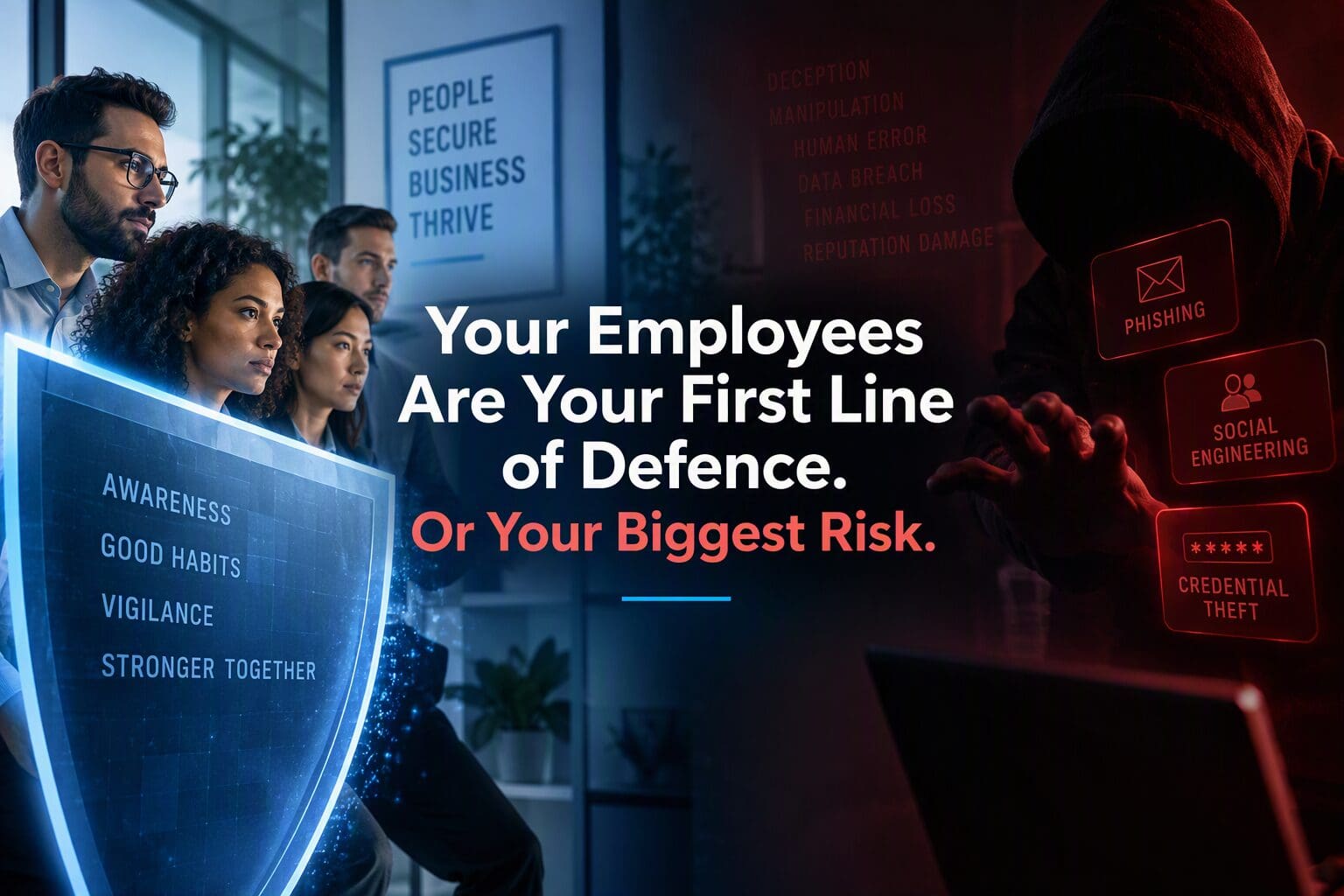
Cybersecurity is often viewed as a technology challenge. Businesses invest in firewalls, antivirus software, endpoint protection, and secure networks to keep threats at bay. Yet despite these investments, many cyber incidents still begin with a simple human mistake.
An employee clicks a malicious link. A password is reused across multiple accounts. Sensitive information is shared with the wrong person. These actions may seem small, but cybercriminals know that people are often the easiest way into an organisation.
The reality is that your employees can be your strongest defence against cyber threats or your greatest vulnerability. The difference comes down to awareness, training, and culture.
Why Cybercriminals Target People Before Technology
Modern cybersecurity solutions are becoming increasingly sophisticated. As organisations strengthen their technical defences, cybercriminals are adapting their tactics. Rather than trying to break through security controls, they focus on manipulating people.
This approach is known as social engineering, where attackers exploit trust, urgency, fear, or curiosity to persuade individuals to take actions that compromise security.
Employees receive hundreds of emails, messages, and notifications every week. Attackers understand that all it takes is one distracted moment for someone to click a malicious link, download an infected attachment, or disclose confidential information.
Unlike technology, people cannot be patched or updated with a simple software fix. Human behaviour is unpredictable, making employees a valuable target for cybercriminals.
Common Employee Mistakes That Lead to Breaches
Most cyber incidents are not caused by malicious insiders. They are the result of everyday mistakes made by well intentioned employees.
Some of the most common examples include:
Weak or Reused Passwords
Employees often use passwords that are easy to remember or reuse the same credentials across multiple accounts. If one account is compromised, attackers can attempt to access other systems using the same login details.
Clicking Suspicious Links
Phishing emails are designed to look legitimate. Employees may unknowingly click a link that directs them to a fake login page or downloads malware onto their device.
Sharing Sensitive Information
Cybercriminals frequently impersonate colleagues, suppliers, or company executives. Without proper verification processes, employees may accidentally disclose confidential data.
Ignoring Security Policies
Security policies only work when they are followed. Shortcuts such as storing passwords in unsecured locations, sharing accounts, or bypassing security controls can create unnecessary risk.
Using Unsecured Devices or Networks
With hybrid and remote working now common, employees may connect to public WiFi networks or use personal devices that do not meet corporate security standards.
Each of these mistakes presents an opportunity for attackers to gain access to systems, data, or financial information.
Understanding Phishing, Social Engineering, and Credential Theft
Phishing remains one of the most successful cyberattack methods because it targets human behaviour rather than technological weaknesses.
A phishing email may appear to come from Microsoft, a bank, a supplier, or even a senior executive within your organisation. The goal is typically to convince the recipient to click a link, open an attachment, or provide login credentials.
More sophisticated attacks use multiple communication channels such as email, phone calls, text messages, and social media. These social engineering attacks are becoming increasingly difficult to identify because they are often personalised using publicly available information.
Once credentials are stolen, attackers can gain access to email accounts, business applications, cloud services, and sensitive company data. From there, they may launch ransomware attacks, steal information, or conduct financial fraud.
The most effective defence against these tactics is a workforce that understands how to recognise suspicious activity and respond appropriately.
Why Security Awareness Training Matters
Technology alone cannot eliminate human risk.
Security awareness training helps employees understand the threats they face and equips them with the knowledge needed to make better security decisions every day.
Effective training should cover:
- Recognising phishing emails and suspicious messages
- Safe password practices and multi factor authentication
- Data protection and privacy responsibilities
- Secure remote working practices
- Reporting suspicious activity quickly
- Understanding emerging cyber threats
Importantly, training should not be treated as a once a year compliance exercise. Cyber threats evolve continuously, and employee knowledge must evolve with them.
Regular training sessions, simulated phishing campaigns, and ongoing education help reinforce good security habits and keep cybersecurity top of mind.
Creating a Security First Culture
Building a secure organisation requires more than policies and training programmes. It requires a culture where cybersecurity becomes everyone’s responsibility.
Employees should feel comfortable reporting suspicious emails, admitting mistakes, and asking questions without fear of blame. Quick reporting can often prevent a minor issue from becoming a major incident.
Leadership also plays a critical role. When senior management actively supports cybersecurity initiatives and demonstrates secure behaviours, employees are more likely to follow suit.
A strong security culture includes:
- Continuous awareness and education
- Clear security policies and procedures
- Leadership involvement and accountability
- Easy reporting mechanisms
- Regular communication about emerging threats
- Recognition of positive security behaviours
When cybersecurity becomes part of everyday business operations, employees transition from being potential vulnerabilities to becoming active defenders of the organisation.
Your People Are the Key to Cyber Resilience
Cybercriminals are constantly looking for the easiest path into an organisation. More often than not, that path involves targeting people rather than technology.
While human error can introduce risk, informed and security conscious employees can significantly strengthen your organisation’s defence against cyber threats. By investing in awareness, education, and a security first culture, businesses can reduce risk, improve resilience, and build a stronger cybersecurity posture.
Strengthen Your Human Firewall
Human error remains one of the leading causes of cyber incidents, but it is also one of the most preventable.
Discover how VBT Security Awareness Training helps reduce human risk and strengthen your cyber resilience. Contact VBT today to learn how we can help your employees become your strongest line of defence.
Other News
Your Employees Are Your First Line of Defence. Or Your Biggest Risk.
Cybersecurity is often viewed as a technology challenge. Businesses invest in firewalls, antivirus software, endpoint protection, and secure networks to keep threats at bay.…
Your Employees Are Already Using AI. The Question Is: Are You Managing the Risk?
Artificial intelligence has moved from being a future technology to an everyday business tool almost overnight. Employees are using AI to draft emails, analyse…
Can Your Business Recover When the Worst Happens?
Cybersecurity is often discussed in terms of prevention. Businesses invest in firewalls, endpoint protection, multi-factor authentication, email security and employee awareness training to reduce…
Your Employees Are Your Strongest Defence. Or Your Biggest Risk.
Cybersecurity is often associated with firewalls, antivirus software, secure backups, multi-factor authentication and increasingly sophisticated security platforms. These technologies are essential, but they are…
The Productivity Gap: Is Your Technology Helping or Hindering Your Team?
Every business wants a more productive workforce. Organisations invest heavily in recruiting talented people, developing their skills and creating environments where they can do…

Why Your IT Should Be Driving Growth, Not Just Keeping the Lights On
For many organisations, technology has traditionally been viewed as a support function. Its primary purpose has been to keep systems running, resolve technical issues…
Future-Proofing Your IT Strategy: 5 Questions Every Business Leader Should Ask
Technology has become one of the most important drivers of business success. It influences how organisations communicate, serve customers, manage operations, protect data, and…

Could Your Business Operate Tomorrow Without Its Key People?
Every organisation has them. The people who seem to know everything. They understand the systems, processes, customer relationships, supplier contacts, and day-to-day operations that…
The Cost of Waiting: Why Businesses Delay Technology Decisions
Every business leader faces difficult decisions. Where should we invest? Which projects should take priority? What can wait until next quarter, next year, or…
The Risks You Won’t Find on Your Risk Register
Most businesses have a risk register. It’s a useful tool for identifying and managing threats that could impact operations, finances, compliance, or reputation. Yet…